Which countertop surface suits which kind of Temecula kitchen
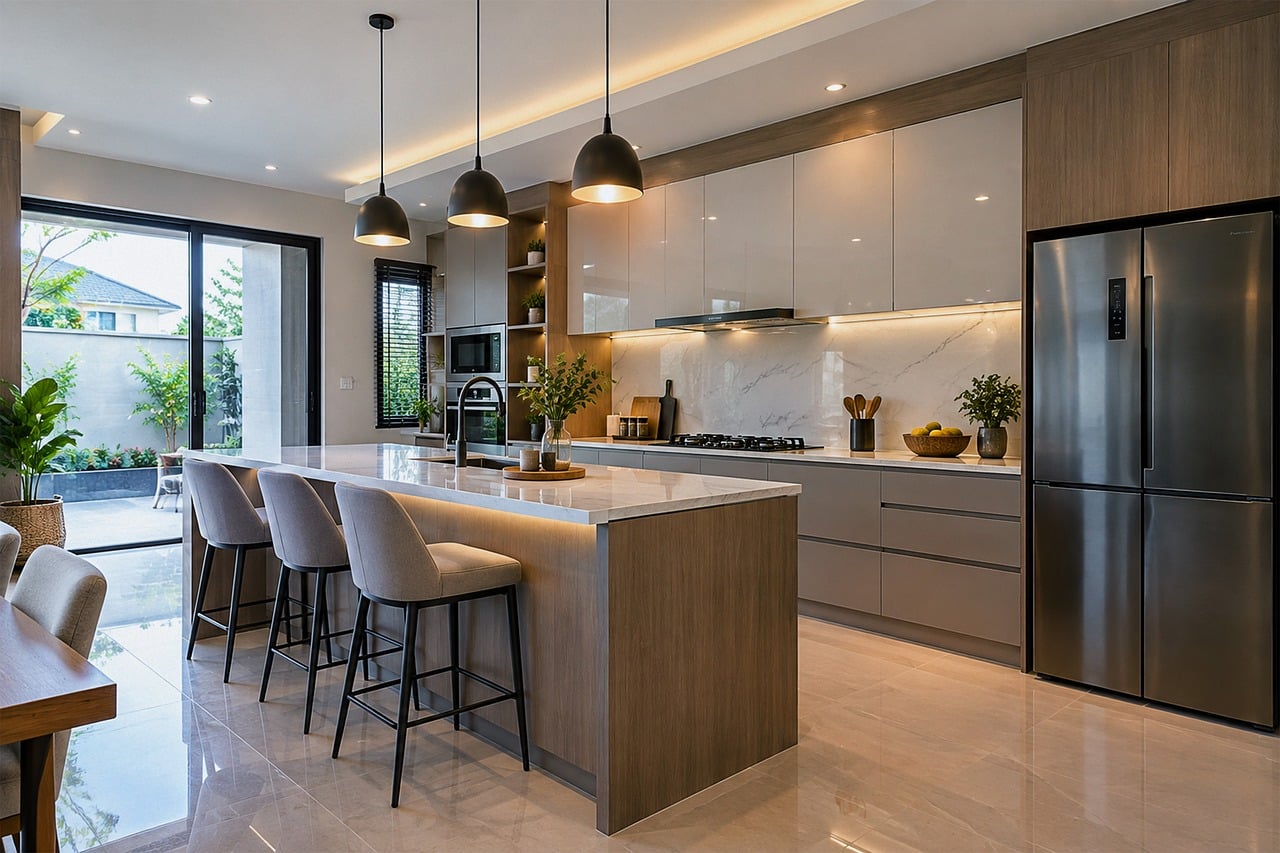
A kitchen in Temecula, CA gets asked to do a lot. It sits in a house that bakes through the summer, it takes a full family breakfast on a Tuesday and a crowd of relatives on a Saturday, and the top that carries all of it has to survive spilled wine, hot sheet pans and a decade of mineral-heavy tap water. Picking the surface is less about a photo in a showroom and more about matching a slab to the way that particular room is used.
What does a countertop have to survive in a Temecula house?
Three things wear a top down more than anything else here: heat, water and weight. Heat comes from two directions. The summer outside pushes a south or west facing kitchen well past comfortable, and the hot pans inside add to it. Water means the daily wiping, the sink splash zone and the hard water of the valley, which leaves white mineral rings wherever a glass sits wet. Weight is the stool someone stands on, the stand mixer that never leaves its spot, and the island that serves as a homework desk.
A material that looks perfect in a bright showroom can behave differently in a house where the afternoon sun hits a window above the sink, so the first question is always where the sun lands and what lives on each stretch of counter.
How do the common surfaces compare?
The table below sorts the usual choices by the qualities a crew sees come back as questions after install. It is a rough guide drawn from how each material is cut, set and cared for, not a ranking.
| Surface | Heat from a hot pan | Staining | Sealer needed | Seams |
|---|---|---|---|---|
| Granite | Tolerates brief contact | Resists once sealed | Yes, periodically | Visible but tight when matched |
| Quartz | Resin can scorch, use a trivet | Very resistant | No | Easy to hide on plain patterns |
| Quartzite | Tolerates brief contact | Resists once sealed | Yes | Veining can make a seam obvious |
| Marble | Tolerates heat, but marks easily | Etches and stains | Yes, often | Veining dictates the cut |
| Soapstone | Handles heat well | Darkens, oil is applied | Mineral oil, not sealer | Soft, seams file down |
| Porcelain | Handles heat well | Very resistant | No | Thin edges need careful cutting |
| Butcher block | Can scorch, needs a trivet | Marks from water | Oil or sealant | Glued joints |
| Solid surface | Can scorch | Resistant and repairable | No | Nearly invisible |
| Laminate | Can blister | Resistant on the surface | No | Visible at joints |
Which surface suits a kitchen that cooks every night?
A household that sears, roasts and fries daily is tough on a top. Granite and quartzite take the abuse well, since both are natural stone that shrugs off a pan pulled straight from the burner for a moment. A trivet is still the right habit, because thermal shock can crack a stone slab if a very hot pot sits in one place. Porcelain slab has become a popular answer for this kind of kitchen, because it takes heat and cuts without chipping if the fabricator has the right blade.
Quartz is a manufactured stone made of ground quartz held in resin. The resin is the weak point where heat is concerned, and a cook who sets a hot pot straight down will eventually leave a pale ring. Quartz suits a cook who is careful, or a family whose real fire is a toaster oven.
Which surface suits a kitchen used more for entertaining than cooking?
For a kitchen used mostly for gatherings, around an island with stools and a bar top, appearance matters as much as durability. Marble and quartzite with dramatic veining make the room look like a showpiece, and many homes near Temecula Valley wine country want that look next to a tasting spread. Marble has a catch: it reacts with acids such as wine and lemon juice, and a dull etched spot appears within minutes. Quartzite looks similar and resists acid far better, which is why it is often the safer pick for a room where red wine moves around.
A waterfall edge on an island adds to the show, though it also adds weight at the end panel, and the cabinet below has to be checked to make sure it can hold the slab up. A deep overhang for stools needs brackets or corbels, and the slab thickness decides how far it can hang before support is required.
What about a kitchen in an older Redhawk-era house?
Many homes in master-planned neighborhoods from the 1990s were fitted with tile counters or post-formed laminate. The cabinets underneath were built to carry that, not a heavy slab. A lighter surface such as porcelain, solid surface or a thinner quartz profile may place less stress on an aging cabinet box than three centimeters of granite. Before choosing, the crew will usually check the frame rails and the sink base, since a sagging box is easier to fix before a top is ordered than after.
Solid surface also suits a house where seams must disappear, because the joint is fused and sanded until it cannot be felt. It scratches more easily than stone, though a light sanding brings the surface back.
How do sun and hard water change the choice?
Strong sun through a kitchen window will fade some dyes over many years, which matters for darker quartz and for a butcher block finished with a clear oil. Natural stone does not fade. Hard water is a quieter issue. A faucet that drips onto a dark top leaves a ring of white mineral. Light patterns hide it, dark polished tones show it, and a honed finish hides it better than a high polish. A quick wipe after use keeps any surface clear, and a bit of white vinegar on a cloth removes a stubborn ring from stone that has been sealed, though acid should never touch marble.
Does the edge profile matter as much as the stone?
It matters more than most people expect. An eased edge has a softly rounded corner that resists chipping and suits a busy house with children. A bullnose is fully rounded and forgiving. A sharp square edge looks crisp, though it catches on sleeves and chips more readily, especially in quartz and porcelain. A mitered edge, which doubles the apparent thickness, is more work to fabricate and leaves a seam along the front that needs a careful match.
The sink cutout also bears on the choice. An undermount sink exposes a polished edge on the underside of the stone, and a stone with open pores, like some granite, benefits from sealing at that cutout so water does not creep in. A drop-in sink hides the cutout edge under a lip, which suits laminate and butcher block.
Can a remnant do the job?
A remnant is a leftover piece from a larger slab, sold when a fabricator has no use for it. It can make a handsome top for a bar, a small island, a vanity or a desk, and it saves a whole slab from sitting unused. The limit is size. The template decides whether the piece fits, and the veining has to read properly across the piece. A remnant seldom covers a full kitchen, though it can cover a wing of one.
Final thought
The right surface follows from what the kitchen actually does, not from a trend. Start with heat, water and weight, and the choice narrows quickly.